

Searching for more information about the differences between a property manager vs realtor?
When it comes to real estate, the professionals you hire can make or break your financial success. Two of the most common roles you will encounter are real estate agents and property managers. While both hold real estate licenses and operate in the same general ecosystem, their day-to-day operations, core expertise, and long-term goals are completely different.
For property owners looking to protect and grow their investment, mistaking one for the other can be a costly error. Here is a breakdown of how these two roles differ and why partnering with a dedicated property manager is essential for safeguarding your rental real estate.

Transactional vs. Operational – The Differences Between Property Manager Vs Realtor
To understand the difference, look at the timeline of a property lifecycle.
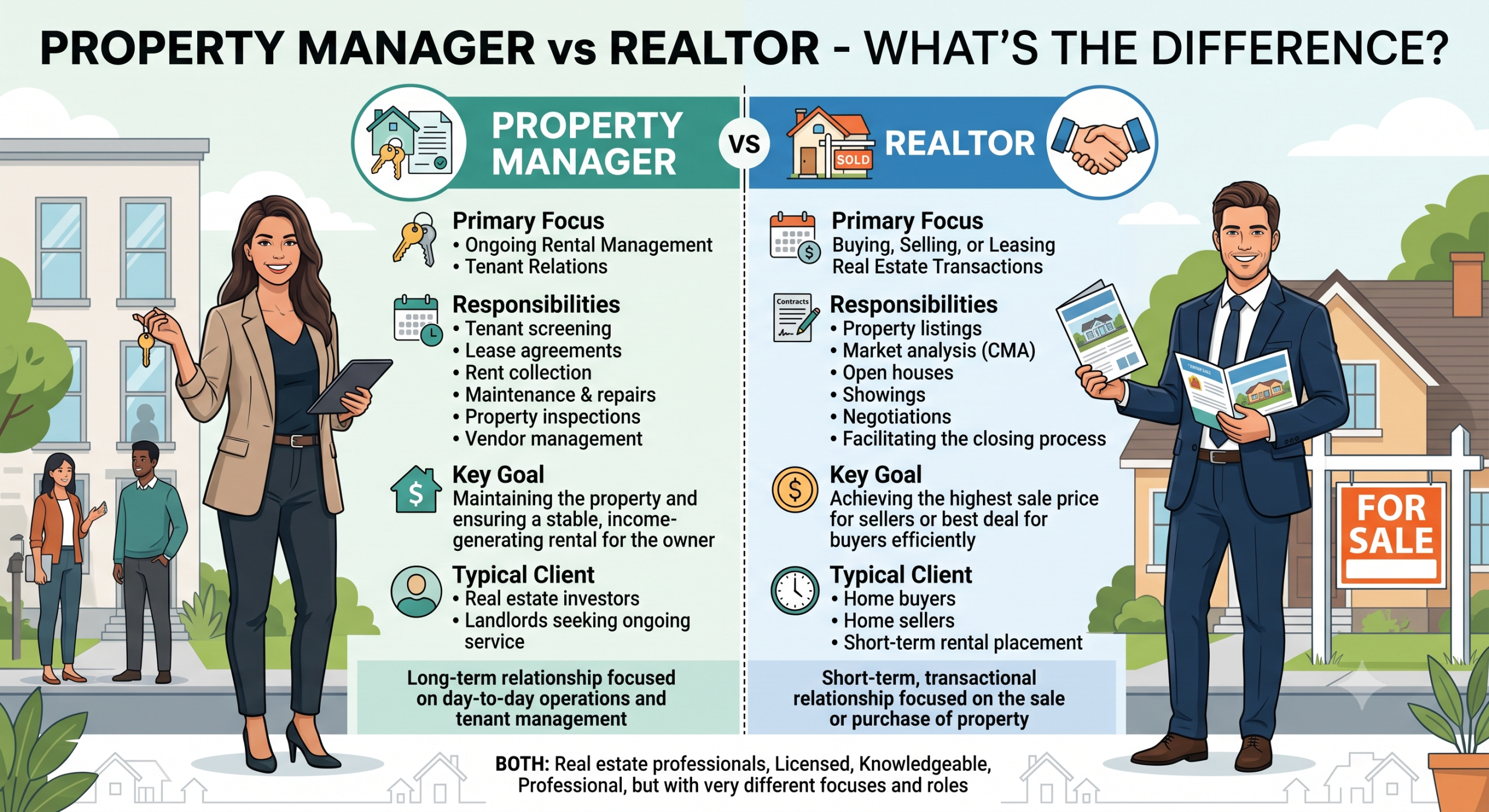
- Real Estate Agents are transactional. Their primary focus is the immediate event of buying or selling a property. They are experts in market analysis, property staging, negotiation, and closing deals. An agent’s relationship with a property typically peaks at the closing table and ends once the keys are handed over and the commission is paid.
- Property Managers are operational. Their focus begins after the acquisition. They manage the ongoing, day-to-day operations of an asset over months and years. A property manager’s job is to maximize the property’s value, preserve its physical condition, and ensure a steady stream of passive income for the owner.
While a real estate agent helps you find or exit an investment, a property manager helps you successfully live with it.

Why Rental Real Estate Requires a Specialist
Owning a rental property is not just about collecting a check on the first of the month. It is a complex, legally sensitive business venture. Choosing a property manager vs realtor is vital because managing rental real estate requires a highly specific skill set that goes far beyond simply knowing how to market a home.
- Mastery of Landlord-Tenant Law
The legal landscape surrounding rental properties is tight and constantly evolving. Property managers are deeply well-versed in federal, state, and local regulations. This includes the Fair Housing Act, local eviction procedures, security deposit escrow rules, and habitability standards.
A single legal misstep—such as asking an improper question during tenant screening or failing to handle a security deposit correctly—can cause severe financial penalties or lawsuits. Property managers act as a legal shield, ensuring every process is fully compliant.
- Comprehensive Tenant Screening Systems
Placing the wrong tenant in a property is one of the most expensive mistakes an investor can make. While a standard real estate agent might run a basic credit check, professional property managers utilize robust, multi-tiered screening systems.
They analyze credit histories, look for past evictions, cross-reference criminal backgrounds, and verify employment and landlord references. Their experience allows them to spot red flags that an untrained eye would miss, ensuring lower turnover rates and reliable rent collection.
- Maintenance Protocols and Cost Savings
Properties deteriorate without active oversight. Property managers possess an established network of licensed, insured, and vetted contractors. Because they provide these vendors with consistent volume, they often secure preferred pricing that individual landlords cannot access.
Furthermore, they understand the critical distinction between emergency maintenance and routine upkeep, implementing preventative maintenance schedules that protect the property’s long-term value and prevent minor issues from turning into thousands of dollars in structural damage.
- Financial Optimization and Reporting
Managing a rental property requires rigorous accounting. Property managers utilize specialized software to track income and expenses, provide detailed monthly cash-flow statements, handle tax documentation (like 1099s), and ensure rent is collected efficiently through online portals. They treat your property like the business it is, optimizing expenses to improve your net operating income (NOI).
The Asset Protection Reality: A realtor understands what a property is worth today. A property manager understands how to preserve and increase that worth over the next ten years.

Property Manager vs Realtor – Making the Right Choice for Your Investment
If your goal is to buy a new property or sell an existing one, a realtor is the professional you need. They will navigate the market complexities to get you the best purchase or sale price.
However, if you already own rental real estate, or have just closed on an investment property, your next step should be hiring a dedicated property manager vs realtor. Trying to manage a rental alone—or relying on a traditional sales agent who handles property management merely as a side hobby—frequently leads to higher vacancy rates, deferred maintenance, and legal vulnerabilities.
By hiring a property manager with specific expertise in rental real estate operations, you transition from being a stressed, on-call landlord to a true real estate investor. Enjoy genuine passive income while your asset is protected by an expert.

Ready to take your rental property to the next level and earn more passive income? Contact our property management team today by calling (503) 646-9664 or click here to connect with us online!


